
The Architecture of Control: The Israeli Colonial Occupation, Executive Power, and the Politics of Aid in Palestine
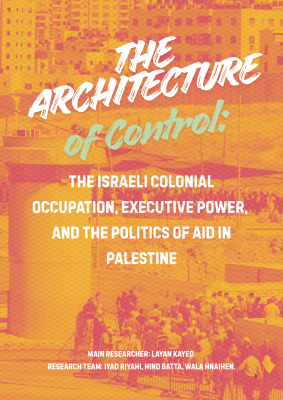
This study examines the contraction of Palestinian civic space as the outcome of a complex architecture of control, where Israeli occupation policies intersect with the centralization of executive power within the Palestinian Authority and the conditionalities of international funding. It analyzes how the roles of civil society organizations and trade unions are being reshaped through a framework of laws, military orders, and decrees by law that go beyond restricting civic action to redefining it within a security–administrative logic—one that transforms oversight into guardianship and renders independence a conditional exception.
The study demonstrates that the shrinking of civic space is neither temporary nor incidental, but rather the product of an entrenched colonial–political structure that works to re-engineer Palestinian civil society and curtail its capacity for action, influence, and accountability. It concludes with a set of recommendations aimed at restoring legislative life, safeguarding the independence of civil society, and building alternative funding models grounded in solidarity and rights, rather than political and security conditionalities.
Main Researcher: Layan Kayed
Research Team: Hind Batta, Iyad Riyahi, Walaa Hnaihen